The eight-hour humanoid shift is impressive. The robots already doing the job are not.
Figure AI livestreamed its Helix 02 humanoid robots working an eight-hour warehouse shift on May 13 — picking up packages, reading barcodes, and placing items on a conveyor belt at roughly human pace. The footage went viral. Comments ranged from "RIP to human workers" to observers noting the robots would be fired within two hours at a real facility. Both reactions share the same blind spot: they treat the humanoid as the only robot in the room.
The demonstration was real. The framing is the problem.
The Helix 02 livestream showed genuine capability. The robots ran three neural networks simultaneously — one for language and planning, one for vision-to-motion, one for real-time balance — all on onboard compute with no cloud connection. When a unit detected an issue, it walked itself to a maintenance area and called a replacement from the fleet. No human in the loop. By the time the stream ended, the robots had processed over 33,000 packages across more than 60 hours.
That is a technical milestone. It is not, however, a warehouse milestone. Autonomous mobile robots have been running full shifts in warehouses for years — and they do not need legs to do it.
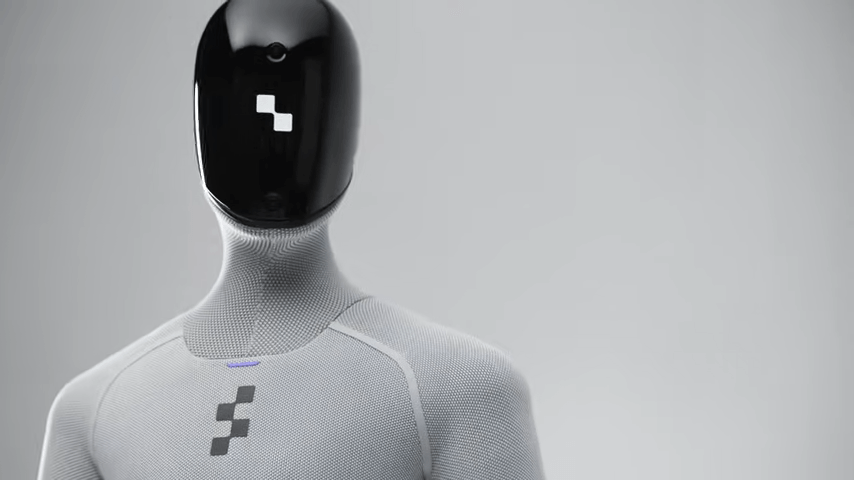
Robot profile: Figure 03 (running Helix 02)
Manufacturer: Figure AI (Sunnyvale, CA) Generation: 3rd-generation humanoid Height: 168 cm (5'6") | Weight: 60 kg (132 lbs) Degrees of freedom: 44 total (16 per hand) Payload capacity: 20 kg per arm Speed: 1.2 m/s (4.3 km/h) Battery: ~5 hours runtime, 2 kW wireless inductive charging via foot-mounted coils AI system: Helix 02 — unified vision-language-action model. System 2 (7–9 Hz) handles scene understanding and planning. System 1 (200 Hz) translates reasoning into joint commands across all degrees of freedom. System 0 replaces 109,000+ lines of hand-engineered C++ with a learned whole-body controller trained on 1,000+ hours of human motion. Sensors: 8 cameras (including palm-mounted), proprietary fingertip tactile sensors (3-gram sensitivity), full-body proprioception Target price: Below $20,000 (consumer, not yet confirmed) | Enterprise pricing active Availability: Not available for public purchase. Select home deployments targeted for late 2026. Valuation: $39 billion (Series C, September 2025) Key deployment: BMW Spartanburg plant — 90,000+ parts moved, 30,000+ vehicles supported during 10-hour shifts
The robots already doing the work
Locus Robotics has deployed 17,000 autonomous mobile robots across 350+ facilities in 20 countries. Those machines have assisted in more than seven billion warehouse picks. DHL alone hit one billion picks with Locus AMRs earlier this year. A fleet of 10 collaborative AMRs costs $600,000 to $1.2 million over five years — versus $2.5 to $3.5 million for equivalent manual labor — with typical payback inside 14 months. Many run on a Robot-as-a-Service model at $1,500 per month per unit, eliminating the capital expenditure entirely.
These robots do not scan barcodes with human-like hands. They do not balance on two legs. They navigate autonomously, coordinate through fleet management software, integrate with warehouse management systems in weeks, and operate around the clock. AMR adoption grew 45% year-over-year in 2025. The global market hit $2.75 billion and is projected to reach $7 billion by 2032. None of this made the front page.
The form factor question nobody is asking
The humanoid form is engineering's most expensive answer to a question most deployments are not asking. A bipedal robot sorting packages on a conveyor belt carries the overhead of balance control, gait stabilization, and whole-body coordination — computational and mechanical complexity that a wheeled platform sidesteps entirely. Figure AI's System 0 alone replaced 109,000 lines of C++ code for the sole purpose of keeping the robot upright. That is not capability. That is cost.
When Locus Robotics unveiled its new Array system at MODEX 2026, the company's CEO called it "the culmination of our 10-year roadmap." Array automates picking, putaway, and replenishment — tasks that require mobile manipulation in constrained aisles — without a single actuated joint dedicated to not falling over. DHL described the system as moving them "beyond traditional assisted picking into a new era of high-density, autonomous fulfillment."
The contrast is instructive. One approach spends billions engineering a human-shaped body to perform industrial tasks in spaces designed for humans. The other designs machines that fit the task and the space as they actually exist.
Consumer autonomy is already here — just not in human form
The same pattern holds outside the warehouse. Vacuuming and mopping robots held 65% of the domestic service robotics market in 2025. Boundary-free robotic lawn mowers posted double-digit growth. iRobot launched eight new Roomba models in 2026 alone. These machines navigate homes using visual SLAM, empty their own dustbins, and operate daily without human input. They are autonomous consumer robots, deployed at scale, in millions of households.
None of them have legs. None of them have hands. None of them are trying to fold your laundry. They succeed precisely because they are purpose-built — optimized for one task, one environment, and one set of constraints.
The ten-year gap the headlines skip
A fully autonomous humanoid robot that can operate all day in your home — the vision Figure AI's CEO says must be achieved before broad consumer release — is conservatively a decade away. The sensing, manipulation, safety certification, and edge-case handling required for a general-purpose machine in an unstructured domestic environment dwarfs what any company has demonstrated in controlled factory tests. The Figure 03 is not yet available for purchase. Its target price is aspirational. Its home deployments are select pilots, not products.
Meanwhile, the robots that are already autonomous, already affordable, and already operating in the places where people live and work do not generate viral livestreams. They generate picks, mowed lawns, and clean floors. For practitioners — the designers, product managers, and operations leads who will actually deploy these systems — the relevant question is not whether a humanoid can survive an eight-hour shift. It is whether the humanoid form is the right design for the job at hand.
Most of the time, it is not. And the machines that prove it are already clocked in.